The - Client background
The Climate Finance Portal is a national digital platform developed to centralize information related to climate change initiatives in Grenada. It serves as a research and coordination tool for government agencies, consultants, development partners, and other stakeholders involved in climate resilience projects.
The portal provides access to project data, policy frameworks, funding sources, and supporting documentation, helping users understand ongoing initiatives, identify opportunities for collaboration, and support informed decision-making.
Problem / Challenge
The existing portal faced several structural and usability challenges that limited its effectiveness. Navigation was not clearly aligned with user needs, making it difficult to locate key information such as projects, policies, and funding sources.
The platform also reflected outdated branding tied to its original funding source, reducing ownership and alignment with government identity. Performance issues, including slow document loading and limited search functionality, further impacted usability.
Additionally, content organization lacked structure, making it difficult for users to explore relationships between projects, identify synergies, and access relevant resources efficiently.
Solution
AZITS provided a structured approach to redesigning and improving the portal to better support its intended purpose as a centralized climate finance resource.
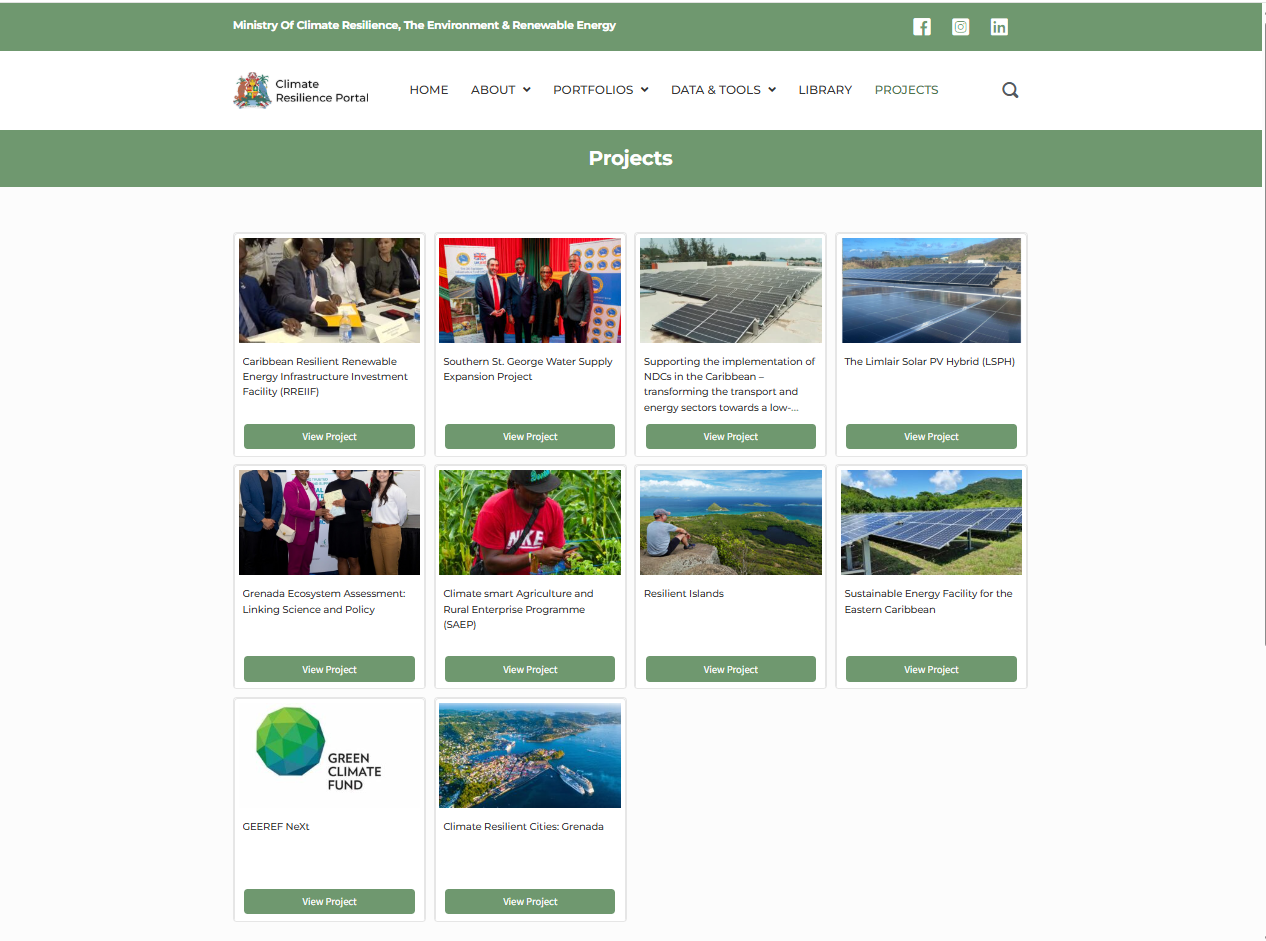
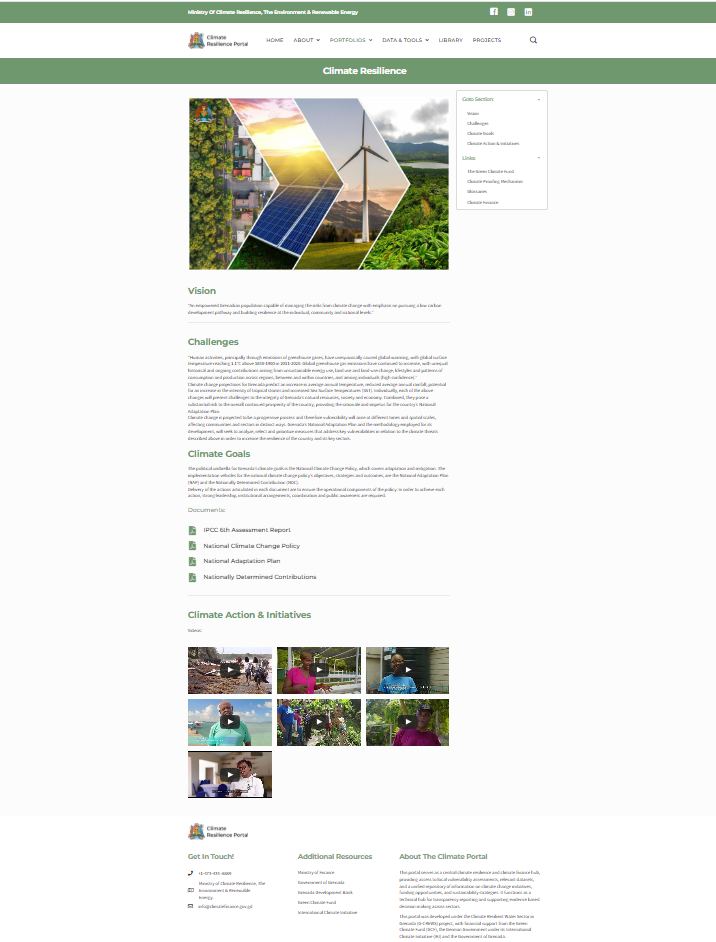
The solution focused on reorganizing the platform around user needs, with a clearer navigation structure emphasizing projects, sectors, institutions, and resources. Enhancements were introduced to improve search functionality, content categorization, and overall accessibility.
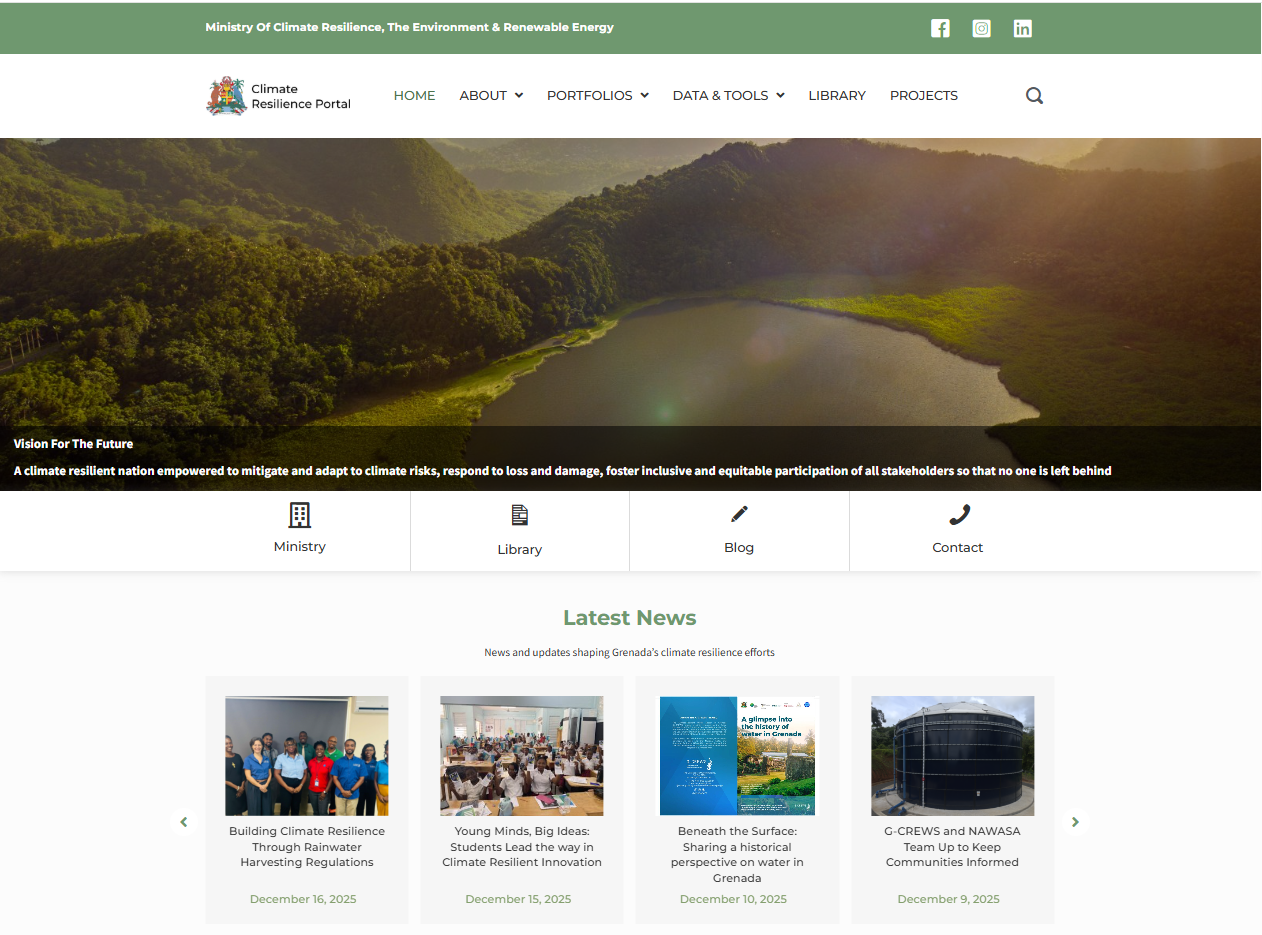
The platform was also redesigned to align with Government of Grenada standards, strengthening institutional ownership and consistency. Additional improvements included optimizing performance, refining the homepage layout, and restructuring key sections such as the document library and blog.
Implemention
The implementation was carried out in phases to ensure clarity, stability, and alignment with stakeholder expectations.
The process began with a detailed review of the existing platform, identifying gaps in structure, usability, and performance. This was followed by redesigning the information architecture to better reflect how users access and interact with climate data.
Key updates included restructuring navigation, improving document management and categorization, enhancing search capabilities, and aligning the visual design with government standards. Performance optimizations were also applied to improve loading speed and overall user experience.
The result is a more structured, accessible, and reliable platform that supports research, collaboration, and informed decision-making across climate-related initiatives.